






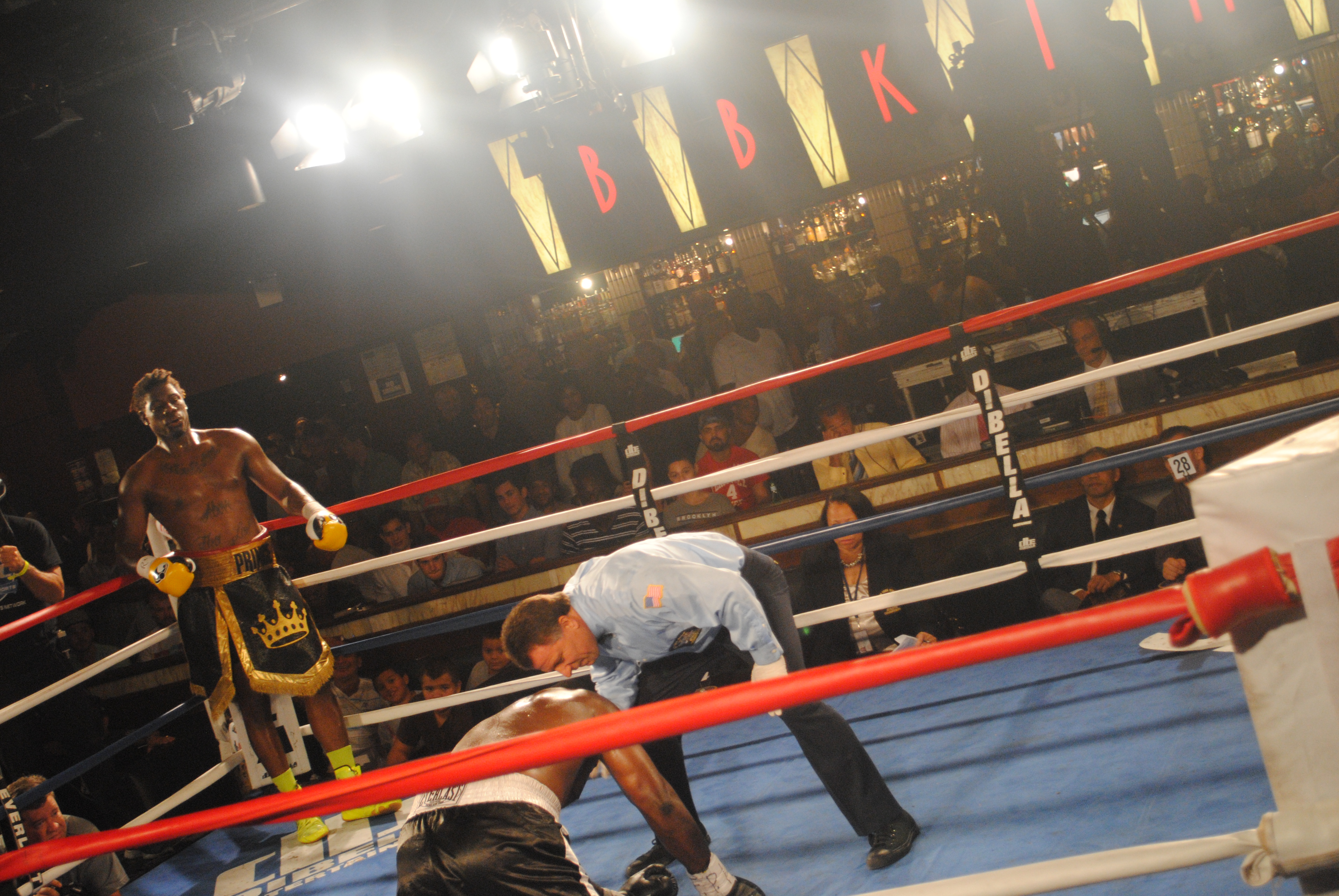
Why The NYSAC New Ambulance Rule 2014-3 Doesn’t Go Far Enough
By Robert Brizel, Head RCM Boxing Correspondent
New York, NY(July 31st, 2014)– During the next several months, this writer will be taking a hard look at the new rules of the New York State Athletic Commission as pertain to official boxing events. With 40 years of observation and experience writing and reporting the science of pugilism, it is my honor to present criticism and critique of rules regarding boxing safety.
To begin, it should be stated (beyond personal opinion and commentary) any hypermodern rule intended to promote boxing safety in the professional boxing rule should be looked upon as a favorable gesture. Likewise, it is my pleasure to take all of the new boxing rules and punch holes in them.
According to Commission Bulletin 2014-3, promoters are required to arrange for at least one ambulance to be present at all boxing events. This rule has become a standard for boxing and other sporting events, amateur and professional, around the world, so it is not a new concept.
In my personal view, there should be three ambulances, with two Emergency Medical Technicians in each ambulance, present at the start of all boxing events, and two ambulances must be present at all times while boxing events are in progress. My logic is simple: if you have two combatants fighting in the boxing ring, they can both get hurt regardless of the outcome of the contest.
The second part of Commission Bulletin 2014-3 states two ambulances are required at the start of a boxing event, and at least one ambulance at all times during the event: one, when an event is broadcast live on television; or two, when an event has nine or more scheduled bouts.
The fact an event is broadcast on television should have no bearing on whether or not an event should begin with more than one ambulance. The message conveyed by such a rule is the commission will express a greater concern for a fighter’s safety simply because an event is being broadcast on a major television network seen by large numbers of people. This concept does not cut the mustard. Concern for a fighter’s safety should not have anything to do with television cameras, and how many people are watching the telecast.
Why is boxing in New York State under such scrutiny? The televised end of Benny Kid Paret started the storm. The deaths of World Welterweight champion Benny Kid Paret (April 3, 1962), super middleweight Beethaeven Scottland (June 26, 2001), and middleweight Willie Classen (November 28, 1979). Also, the permanent brain injuries sustained by heavyweight Magomed Abdusalamov (November 2, 2013), the post-fight broken jaw sustained in the ring by light heavyweight Richard Grant, and the 10 round No-Contest bout fought by Luis Resto with an ounce of padding removed from each of his gloves by Panama Lewis which permanently damaged Billy Collins Jr., are all examples as to why the NYSAC is still under the public microscope.
Nine of more bouts require two ambulances at the start of the boxing card is another rule which deserves scrutiny. As stated earlier, there should be multiple ambulances at the start of a boxing event regardless of the number of combatants and bouts. Two boxers can get hurt at a fight card with one bout just as easily as a card with nine bouts.
Perhaps the greatest concern should be who gets to order the ambulances. Only commission doctors typically have this say so. The referee, the inspector, the fighter and his corner man, the promoter, the manager, should have the right to send a fighter to the hospital in an ambulance even if the fighter passes the post-fight examination by a doctor. The worry would be if you give too many ring personnel this power, you will not have the ambulances available to complete your boxing card.
The adage safety first should take precedent. With two ambulances present before the remaining main event bout at Madison Square Garden, NYSAC inspector assigned Matt Farrago was unable to order one of them be used by Magomed Abdusalamov when the fighter’s urine showed blood after his 10 round heavyweight bout. The time factor, getting an injured fighter to the hospital in time for immediate medical treatment, even notifying hospitals before the event, and designating a nearby hospital emergency room to be on standby in the event a boxing event emergency does occur with an injured fighter or other, are all additional factors which need to be written into the rule as well to save lives.
Non-boxers can take ill in the ring as well. Trainer Lou Duva, who has coronary problems, collapsed during the infamous Riddick Bowe versus Andrew Golota match on July 11, 1996, after Golota was disqualified for low blows. What happened to Lou Duva took a back seat to the riot aspect which ensued in the ring, but you can see why having multiple ambulances at any boxing event are important if you watch the archival footage of the Bowe versus Golota match here. http://www.youtube.com/watch?v=HV8A7jCf4Cg


 English