





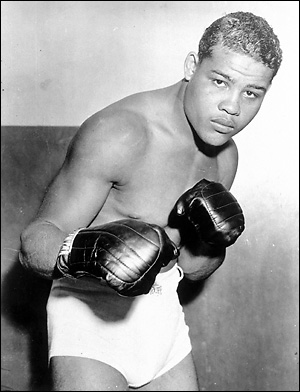
How Hoover’s FBI Affected Joe Louis and Dr. King
By Robert Brizel, Head RCM Boxing Correspondent
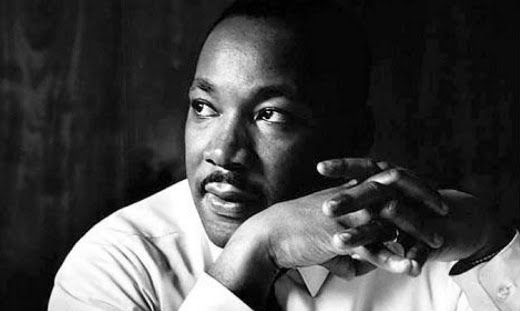
The late former world heavyweight champion, Joe Louis Barrow AKA ‘The Brown Bomber’, interacted with the late Rev. Dr. Martin Luther King Jr. at some point during the American Civil Rights Movement led by. Dr. King in the 1950s and 1960s. Louis was not active in the Civil Rights movement, however. Known more for his passive and coached low profile personality so as so be more socially acceptable. Dr. King, while outspoken, more a pacifist in personality and approach than his other contemporary, the late Malcolm X. For Louis and Dr. King, the common denominator was hate-related to the racial divide at the time. The culprit guilty of complicity was the late Federal Bureau of Investigation Director J. Edgar Hoover.
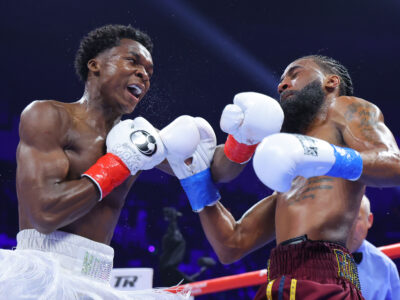
Joe Louis held the world heavyweight title between 1937 and 1949, making 25 world title defenses. He is ranked as the number one heavyweight all-time by the International Boxing Research Organization, and is ranked number one on Ring Magazine’s list of the hundred greatest punchers all-time. An attempt to regain the heavyweight title from the champion Ezzard Charles in 1950 after coming out of retirement ended in a 15 round loss by decision.
Both Dr. King and Joe Louis were badly persecuted and threatened, each in their own way. Enough time has now passed after the death of both men for various facts to be examined forwhat and why, and its relevance-not just in the sport of professional boxing, but in an understanding of human nature and the meaning of mankind.
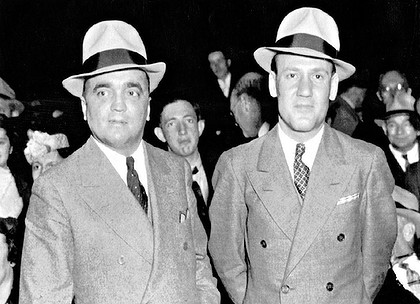
Louis’ reputation was shattered for his entire life due to his financial burden. Dr. King was assassinated under questionable circumstances. J. Edgar Hoover ruled the FBI with an iron hand for over half a century, wielding tremendous power and knowing how to use it since 1917, when he went to work for the Justice Department when he went to work for the war emergency division, and soon became Head of the division’s Alien Enemy Bureau. Hoover became head of the bureau of Investigation’s new General Intelligence Division in 1919, Deputy Head of the Bureau in 1921, and Head of the Bureau in 1924. Hoover was instrumental in founding the FBI in 1935, which he ran till his death in 1972 with his life partner, the late Clyde Tolson.
Hoover and Tolson were also-as it turns out-big boxing fans who attended all important boxing shows. Joe Louis-for all his patriotism and kindnesses-was a victim of exploitation by his inner circle, and the subsequently United States Government. Of the $4.6 million earned by Louis during his boxing career, most of his purse money went to his handlers. Louis received only about $800,000 of his earnings during his career. He gave generously to his own family. Hoover was well aware of the financial exploitation of Louis in the faceof his patriotism by his handlers over the years, and the financial mismanagement Louis incurred. Consequently he facilitated the IRS and its financial attacks on Louis, who was black. In contrast, when Hoover died in 1972, his deputy and companion, Clyde Tolson, inherited Hoover’s estate valued at over half a million dollars, his title as FBI Director (Tolson resigned shortly thereafter once he was sure Hoover’s secretary had destroyed Hoover’s personal files), Hoover’s life insurance policy and Hoover’s home.
The combination of not receiving most of his income after each bout and inappropriately placed trust in his manager put Joe Louis in severe financial straits. Louis entrusted his finances to manager Mike Jacobs, which was a financial disaster. After Louis was assessed with a $500,000 Federal tax bill, with interest added to it every year, Louis was forced out of retirement against his will due to financial necessity to return to the ring, where he was eventually knocked out by Rocky Marciano.
Even though his comeback bouts earned him significant purses, the ninety percent incremental tax rate in effect at the time meant his boxing proceeds did not keep pace with the growing interest on his tax debt. After retirement from boxing, Louis became a professional wrestler for many years. However, by the end of the 1950s, a broke Louis owed over one million dollars in back taxes plus interest. Singer Frank Sinatra and former world heavyweight champion turned business Max Schmeling gave their friend Joe Louis money through the years, but their help was not enough.In 1953, when Louis’s mother died, the IRS took away the $667 she had willed to her son as partial payment, an indicator of the fire straits Louis remained in financially..
Louis enlisted in the United States Army during World War II. And gave away substantial purse money from his bouts to government relief. Held accountable for back taxes anyway on the money he had donated to help the war effort, Louis lived his life in debt and near poverty, his cause saved only by generously being given a job as a tourist greeter at Caesar’s Palace in Las Vegas and the kindness of friends. Although he remarried, his last years were spent with heart troubles and strokes, making it hard for him to speak after he retired.
Despite the financial suffering directed by the IRS against a former black heavyweight champion, Louis lived largely due to the intervention and caring others. Mafia mobster Frank Lucas, disgusted with the government’s treatment of Louis, paid off a $50,000 tax lien held against Louis by the internal Revenue Service. Tanks to his wife’s intervention, an eventual agreement was hammered out in the 1960s with the IRS to limit its collections from Louis to an amount based on Louis’s current income. This allowed Louis to live reasonably comfortable toward the end of his life while in declining health. In addition, former world heavyweight champion Jack Dempsey served as honorary chairman of a financial fund created by friends and admirers, which also assisted Louis in his days of need.
Drug abuse by Louis caused him to collapse on a New York City street in 1969, eventually winding up at the Colorado Psychiatric Hospital and the Veteran’s Administration Hospital in Denver for a brief period, but he rehabilitated and recovered. Louis was frequently mocked by the African-American community for being seen as a cooperating Uncle Tom of the white establishment during his years as a boxer, as coached to behave as such by his handlers. His rival, the late Max Schmeling, was a pallbearer who helped pay for Louis’ funeral with military honors in Arlington National Cemetery in 1981.
Hoover’s FBI and The Plight of Dr. Martin Luther King Jr.
In 1964, The FBI, fearful of the Communist connection between the Rev. Dr. Martin Luther King Jr. and the Communist Party, anonymously sent Dr. King a threatening letter containing an explicit cassette containing various incriminating audio recordings of Dr. King with various women. The recordings were obtained during a nine month surveillance project by William C. Sullivan, the FBI Head of Intelligence Operations under Hoover. Dr. King saw the letter as a direct instruction for him to commit suicide to prevent The FBI from leaking the incriminating liaisons to the general public through the media. Dr. King was assassinated in Memphis, Tennessee in 1968
James Lawson, Dr. King’s friend, and an organizer with Southern Christian Leadership Conference, later testified Dr. King’s campaign against the Vietnam War and his activism in the Poor People’s Campaign had created enemies in Washington D.C. He said King’s speech at New York City’s Riverside Church in 1967, which condemned the Vietnam War and identified the United States government as the greatest purveyor of violence in the world, had provoked intense hostility in the White House and the FBI. The role of Hoover’s FBI, its complicity in the assassination of Dr. King, and the conspiracy which resulted, was outlined in an article by Jim Douglas in Probe Magazine in Spring 2000, entitled ‘The Martin Luther King Conspiracy Exposed in Memphis’. The article is well-documented and can be found online at
http://www.ratical.org/ratville/JFK/Unspeakable/MLKconExp.html

COMMENTS

 English